
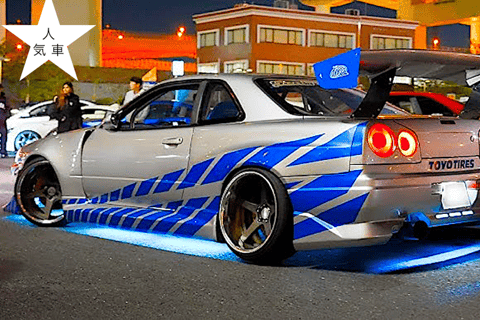
Tour Overview: Quick-Reference Summary
Before diving into the full guide, here are the essentials you need to know about this tour.
| Price Range | Approx. $100–$150 USD (see GetYourGuide for current pricing) |
|---|---|
| Duration | Approx. 3–4 hours (night tour) |
| Advance Booking | Required — walk-ins are not accepted |
| Meeting Point | Central Tokyo or Yokohama area (confirmed after booking) |
| Vehicle | Toyota Supra A80 (JZA80) — custom modified |
| Engine | 2JZ-GTE inline-six 3.0L twin-turbo |
| Driver's Licence | Not required — professional driver operates the vehicle |
| Languages | English & Japanese |
* Pricing and tour details may change. Always confirm the latest information on the official GetYourGuide booking page.
What Is the Supra Night JDM Experience?
Living the Fast & Furious Fantasy — for Real
"Tokyo Drift Daikoku: Modified Supra Night JDM Experience" is a night tour that puts you inside a genuine Toyota Supra A80, lets you blast along the Shuto Expressway Bayshore Route through the Tokyo–Yokohama night, and delivers you to Daikoku PA for an authentic JDM car meet.
This is not a sightseeing bus. The car you will be riding in is a properly modified Supra: 2JZ-GTE twin-turbo under the bonnet, custom exhaust, tuned suspension, and a body kit that turns heads at every stoplight. No recording can prepare you for the sound of that engine when boost hits — you simply have to be there.
A professional driver handles the wheel while you enjoy the ride from the passenger or rear seat. As the Shuto Bayshore Route's industrial nightscape rolls past the window, you are headed for Daikoku PA — where you will have free time to walk the lot, photograph the Supra, meet other JDM owners, and absorb the atmosphere of one of Japan's most famous car-culture gathering spots.
How the Tour Runs (Typical Schedule)
- Meet-up (7 pm – 9 pm approx.) — Rendezvous with your guide and driver at the designated point in Tokyo or Yokohama. Safety briefing and Supra introduction included.
- Supra departs for the expressway — The moment the 2JZ-GTE fires up, the experience has already begun. The Shuto Bayshore Route offers front-row views of Yokohama Port at night.
- Arrive at Daikoku PA — free exploration (1–2 hours) — Park the Supra and explore the car meet at your own pace. Photo time with the Supra, mingling with owners, taking in the spectacle.
- Return leg — Back on the expressway and back to the meeting point for the conclusion of the tour.
The real value of this tour lies in the vehicle itself. GT-Rs and EVOs are brilliant machines, but the Supra carries a different kind of cultural gravity. The movie legacy, the history of engine tuning, the ongoing passion of collectors worldwide — all of it is compressed into one car: the A80. This is a JDM experience you should do at least once in your life. — Author, 10+ years covering JDM culture
Toyota Supra A80: History and Legend
The Supra Lineage
The Toyota Supra story begins in 1978 with the Celica XX — originally conceived as a flagship version of the Celica. By 1986 and the A70 generation, the Supra had grown into a standalone nameplate. Then in 1993 came the fourth-generation A80, widely regarded as the pinnacle of the entire lineage.
The A80 Supra was built from 1993 to 2002. Measuring 4,520 mm long and 1,810 mm wide, it used a front-engine, rear-wheel-drive layout with an inline-six mounted longitudinally. Two versions were offered — turbocharged and naturally aspirated — but the car that captured imaginations worldwide was unquestionably the turbo model, powered by the 2JZ-GTE.
The Legend of the 2JZ-GTE Engine
The 2JZ-GTE stands as one of the greatest engines Toyota — or arguably any manufacturer — has ever produced. Key stock specifications:
- Displacement: 2,997 cc (3.0 L)
- Configuration: Inline-six DOHC, 24 valves
- Forced induction: Sequential twin-turbochargers (CT20A + CT15B)
- Peak power: 280 hp (Japan's voluntary gentlemen's agreement cap; actual output is widely accepted to be higher)
- Peak torque: 430 Nm (44.0 kgm) @ 4,000 rpm
- Engine block: Cast iron — the source of its extraordinary durability and tuning headroom
The engine's legendary status comes from its ceiling being almost impossibly high. A stock 280 hp block, with the right modifications, can realistically reach 800 hp — and 1,000+ hp builds are well-documented. Tuners around the world consistently cite the 2JZ-GTE's cast-iron block rigidity as the reason it handles abuse that would destroy lesser engines.
The sequential twin-turbo setup pairs a smaller CT15B for low-rpm response with a larger CT20A that kicks in at higher revs, minimising turbo lag while maintaining a wide power band. For 1993, this was genuinely cutting-edge engineering.
Performance and Cultural Standing
From rest to 100 km/h takes approximately 5.0 seconds in stock trim, with a factory speed limiter set at 250 km/h. Delimited and tuned examples have been clocked past 300 km/h. The body uses aluminium for the bonnet and doors to keep weight to 1,570 kg (turbo, six-speed manual specification).
The gearbox is either a six-speed manual (Getrag sourced) or a four-speed automatic. Serious drivers reach for the six-speed, but whichever version you ride in on this tour, the essential character of the Supra will come through loud and clear.
The Fast & Furious Connection — How a Movie Made an Icon
Brian's Orange Supra — The Moment That Changed Everything
When The Fast and the Furious hit cinemas in 2001, Paul Walker's Brian O'Conner and his orange Toyota Supra A80 became instant icons. For a generation of car enthusiasts worldwide, that single film redefined what a sports car could mean culturally.
The climactic quarter-mile showdown between Dom and Brian — "Don't have a NOS button?" — is the scene where the Supra ascended from mere automobile to cinematic legend. The sight of that wide-body A80 stretching its legs down the strip is one of the most replayed moments in car-movie history.
Several Supras were used during production (including stunt cars), and one of the surviving hero cars sold at auction in 2021 for approximately $185,000 USD — a figure that illustrates just how much cultural weight a single JDM car can accumulate.
Tokyo Drift and the Supra's Return
The Fast and the Furious: Tokyo Drift (2006) brought the Supra back for the climactic mountain-pass battle, this time in the hands of Han. The film introduced the world to Japan's drift scene and sent global interest in Tokyo and Yokohama's JDM car spots — Daikoku PA in particular — soaring.
Much of the filming took place in Los Angeles, but Shibuya Crossing, several multi-storey car park drift sequences, and a handful of scenes near Yoyogi Park were shot in actual Tokyo. The film's influence on Daikoku PA's international profile cannot be overstated.
What the Films Did to the Supra Market
Before the original Fast and the Furious, a solid A80 Supra in North America traded for around $15,000–$25,000. Post-franchise, values climbed steadily. By the 2020s, clean turbo six-speed examples routinely exceed $100,000 USD. In Japan the same shift happened: cars that changed hands for the equivalent of $45,000–$60,000 in the 1990s now command $35,000–$150,000 USD or more depending on condition and specification.
This tour offers something most travellers could never arrange on their own: a legitimate, insured seat inside one of these increasingly rare and valuable machines.
The performance depicted in the Fast and the Furious — a Supra holding its own against a Dodge Charger — involves some Hollywood licence. Stock 2JZ-GTE output is 280 hp. However, the production team's mechanics are on record confirming the hero cars were built to over 600 hp. In the real tuning world, 2JZ builds regularly surpass anything shown on screen. The fiction, if anything, undersells reality.
Insider Tips: How to Get 10× More Out of This Experience
Before You Get in the Car
The moment you meet your guide, take a full walk-around of the Supra and photograph it before you board. Once you arrive at Daikoku PA, you will be surrounded by other cars and people, and the temptation is to explore immediately — at which point it is easy to forget exterior shots of the Supra on its own. The lighting at the meeting point offers a completely different aesthetic to Daikoku's orange sodium lamps, and both are worth capturing.
Don't Miss the Engine Start
The moment the 2JZ-GTE cranks to life — roughly ten seconds from cold crank to stable idle — is one of the highlights of the entire tour. Have your phone in video mode, and shoot landscape rather than portrait; you will thank yourself later when the clips hit your social feed. The sound of a modified inline-six settling into its idle is something that should be documented properly.
The "Golden 30 Minutes" Strategy at Daikoku PA
The first thirty minutes after arriving at Daikoku PA are your most valuable for photography. The lot is still manageable, and you can isolate the Supra in the frame without other cars crowding in. After 9 pm the crowd swells dramatically, which is spectacular to experience — but getting a clean solo shot of the Supra becomes difficult. Prioritise your composed Supra shots early, then relax and enjoy the atmosphere.
Ask to Pop the Bonnet
Request that your guide open the bonnet at Daikoku PA. Standing over an exposed 2JZ engine bay while your guide walks you through the modifications — aftermarket intercooler, uprated turbos, bespoke engine covers — gives the experience real depth. Seeing why tuners revere this engine is far more impactful than being told about it.
Breaking the Ice with Other Owners
Daikoku PA attracts owners who are well aware of the venue's international reputation and are generally open to curious visitors, especially those who have arrived in a Supra. The mere fact that you stepped out of an A80 is a conversation opener in itself. You don't need much Japanese: "2JZ?" and "What tune?" will carry you remarkably far.
What to Bring
- Layers: The Yokohama waterfront is breezy year-round. Even in summer, a light jacket is recommended; in autumn and winter, dress for proper cold.
- Smartphone fully charged: A recent flagship in night mode will handle Daikoku PA's lighting perfectly. Bring a cable or power bank just in case.
- Portable battery pack: Three to four hours of heavy photo and video use will drain most phones. A power bank removes the anxiety.
- A little cash: Vending machines inside Daikoku PA are cash-only. ¥500–¥1,000 is more than enough for drinks.
Ticket Comparison: Standard vs. Premium
The GetYourGuide platform sometimes lists multiple participation options for this tour. Here is what to expect from each, so you can choose what fits your budget and expectations.
| Feature | Standard Plan | Premium Plan |
|---|---|---|
| Vehicle | Modified Supra A80 (standard spec) | High-tune or premium custom specification |
| Daikoku PA visit | ✓ Included | ✓ Included |
| Shuto Expressway night run | Round trip to Daikoku PA (standard route) | Extended route with additional spots |
| English guide support | ✓ Yes | ✓ Yes |
| Photo time with the Supra | Free shooting at Daikoku PA | Dedicated photo session (where available) |
| Price range | $100–$130 | $140–$180+ |
| Best for | First-timers, value-seekers, film fans | Returning guests, spec enthusiasts |
* The above is for general reference. Always check the official GetYourGuide booking page for current options and pricing.
Which Should You Choose? — Our Take
If this is your first time, the Standard plan is the right call. The experience of riding in the Supra and standing in the middle of Daikoku PA at night is so overwhelming that the difference in tune level is unlikely to register on a first visit. The Premium plan is ideal for those returning after the Standard and wanting to push deeper into the performance side of things.
When to Go: Best Nights and the Daikoku PA Golden Hour
Which Night of the Week Is Best?
Weekend nights dwarf weekday gatherings at Daikoku PA. The biggest crowds form on Friday night through Saturday morning and Saturday night through Sunday morning — peak times when hundreds of tuned cars can fill the lot. Weeknights offer a smaller, more intimate crowd that lets you spend quality time with individual cars.
How the Night Unfolds Hour by Hour
- 8 pm – 9 pm — The ideal arrival window. Parking space is still plentiful and wide-angle compositions of the entire lot are possible. Prime photography hour.
- 9 pm – 11 pm — Peak time. 200–400 cars on a strong weekend. Competing exhaust notes, open bonnets everywhere, owners deep in conversation. The full Daikoku PA experience.
- 11 pm – 1 am — The crowd begins to thin, but the cars that remain are often the most committed regulars. Excellent for long-exposure and time-lapse photography.
- After 1 am — Core local regulars only. The tour typically concludes around this time.
The Photography "Golden Hour" at Daikoku PA
In photographic terms, your golden window is the first thirty minutes after arrival. Space allows clean, uncluttered compositions with the Supra as the subject. Later, the density of cars becomes dramatic — great for atmosphere shots, but challenging for isolated portraits.
The orange sodium vapour lighting at Daikoku PA creates a distinctive warm glow on the Supra's bodywork that is unlike anything else. After rain, the wet tarmac reflects everything, and the lot genuinely looks like a film set.
Best Season to Visit
Late spring (May–June) and autumn (September–November) are the most comfortable periods for this tour. Mild temperatures make the outdoor time at Daikoku PA enjoyable, and local car owners are most active during these months.
Winter (December–February) calls for serious warm clothing, but the quieter, frost-tinged atmosphere has its own appeal — and a less crowded lot actually makes for cleaner photography. Midsummer (July–August) brings humid heat that can discourage some owners from running their cars hard, so attendance is slightly lower.
Smart Booking: How to Save Money
Book as a Group
Bringing friends or family unlocks group-rate pricing that reduces the per-person cost. The more people in your party, the better the per-head value — going from two to four or five participants can make a meaningful difference. Sharing the tour with like-minded travel companions also makes the experience more fun.
Book Early
- Some operators offer early-bird discounts for bookings made two to four weeks in advance.
- Saturday nights are the most in-demand and are subject to dynamic pricing — Friday or Sunday nights may be slightly cheaper for the same experience.
- GetYourGuide occasionally runs limited-time promotions; it is worth checking their deals section before finalising your booking.
Leverage the Free Cancellation Policy
Most listings offer free cancellation up to 24 hours before departure. If your travel dates are not yet confirmed, you can hold a spot provisionally and cancel without penalty if plans change. Always verify the specific cancellation terms on the booking page before committing.
Consider Combining Tours
If you are also interested in the Daikoku PA car-meet tour or a drift lesson, booking multiple tours with the same operator often unlocks package savings. Ask your guide directly during the tour — operators sometimes offer unpublished returning-guest rates or combination deals on the night itself.
Why Book Through GetYourGuide
GetYourGuide provides secure payment processing, multilingual customer support, and a standardised cancellation guarantee. The platform also allows you to compare multiple Daikoku PA-area operators side by side, making it easier to find the best fit for your itinerary and budget.
What Actually Happens on the Night — A Realistic Account
From Meet-up to Departure
You will feel the Supra before you have even opened the door. Under the street lighting at the meeting point, the A80's body lines are more aggressive in person than any photo suggests. Your guide and driver will walk you through the car's specific modifications — suspension, exhaust setup, engine tune — while completing the safety briefing. For anyone with even a passing interest in cars, this ten-minute introduction alone will generate more questions than there is time to answer.
On the Shuto Expressway — The 2JZ Comes Alive
As the on-ramp straightens out onto the expressway, the driver opens the throttle. This is when you feel the 2JZ-GTE transition from a docile idle to something altogether different. Above 3,000 rpm the boost arrives — and it presses you into the seat with a forcefulness that is completely alien to any normal road car or rental. The sensation is physical, not just auditory.
Through the Shuto Bayshore Route, the Yokohama port industrial nightscape scrolls past: cargo ships lit up offshore, the amber glow of refinery towers, the Yokohama Bay Bridge cutting across the darkness. It is worth putting the camera down for a moment and just watching.
One to Two Hours at Daikoku PA
Pulling into Daikoku PA, you are immediately hit by sound, light, and heat. Dozens to hundreds of tuned cars idling and revving, blow-off valves punctuating the night air, owners clustered around their cars in animated conversation — this is JDM car culture in its most concentrated form.
Your guide will orient you, pointing out notable cars and the PA's informal zones: the GT-R corner, the tuned imports section, the stance-build area. These groupings are unspoken but consistent from night to night.
Photography is generally welcome, but follow basic etiquette: no flash on other people's cars, and consider cropping or blurring licence plates before posting online. Your guide can bridge any language gap if you want to approach an owner directly.
The Return Run
Leaving Daikoku PA and rejoining the expressway, the adrenaline of the outward journey has settled enough that you can pay closer attention to the car itself: the vibration through the seat, the way the chassis responds to the motorway's gentle sweeps, the exhaust note changing with each gear change. These details are what anchor the memory long after the tour ends.
Resist the urge to cover every inch of the lot. Daikoku PA is large, and trying to see everything guarantees you absorb nothing. Find a good vantage point near the Supra, let the cars come to you, and when one catches your eye, commit to it fully. The depth of a JDM experience is measured in the quality of your encounters, not the number of cars you walked past.
Expert Insights: Ten Years Covering JDM Culture
Why the Supra Specifically
GT-Rs, RX-7s, EVOs, WRXs — Daikoku PA offers access to a broad spectrum of JDM machinery. The reason this particular tour stands apart is the depth of story wrapped around a single car. The Supra's narrative runs unbroken from 1993 to the present: the film legacy, the engine-tuning folklore, the escalating collector market. All of that compresses into the moment you settle into the passenger seat. No other JDM vehicle carries quite that weight.
What Has Changed at Daikoku PA — and What Hasn't
Compared to the early 2010s, Daikoku PA is unquestionably more international. The global rise of JDM culture on social media has brought visitors from every continent. Some veteran local drivers now arrive and leave earlier than they once did. That is real, and it is worth acknowledging.
What has not changed: the organic energy of the gathering, the sheer density and variety of machines that no other venue in the world replicates, and the singular backdrop of Yokohama Port at night. Good tour guides factor in those shifts when planning their routes and timing — and the best ones know exactly when and where to be for maximum impact.
Getting the Most Out of the Technical Side
If time allows, ask your guide: "What boost pressure is this car running?" Stock 2JZ-GTE boost is around 0.8–0.9 bar. A properly tuned example might be running 1.5–2.0 bar or beyond. That difference is the gap between 280 hp and 600+ hp, and once you understand the number, every surge of acceleration you feel acquires a new frame of reference.
Who This Tour Is Perfect For — and Who Might Prefer Something Else
Strongly recommended for: Anyone whose interest in JDM was sparked by the Fast & Furious films; Supra or 2JZ devotees; travellers who want to combine Tokyo nightlife with genuine car culture; content creators seeking cinematic material that no stock library can provide.
There may be a better fit if: You specifically want to get behind the wheel yourself (see our Private Drift Lesson page); you are set on experiencing a GT-R R35 (see our GT-R35 Experience page); or you are looking for a more budget-friendly entry into JDM (see our EVO / WRX Night Run page).
Frequently Asked Questions
The most common questions we receive about the Supra Night JDM Experience, answered before you book.
Compare Other JDM Tours
The Supra night experience is one of several JDM tours available in the Tokyo and Yokohama area. Use the table below to find the best match for your interests and budget.
| Tour | Vehicle | Highlight | Best For |
|---|---|---|---|
| Supra Night JDM Experience (this page) | Supra A80 (2JZ) | Maximum cultural weight — the film icon in the flesh | Film fans, Supra enthusiasts |
| EVO / WRX / Skyline Night Run | EVO / WRX / Skyline | WRC-bred 4WD performance at a friendlier price point | 4WD sport fans, first-timers |
| GT-R35 Experience | Nissan GT-R R35 | Modern JDM supercar — 600+ hp shock and awe | Modern JDM supercar seekers |
| Private Drift Lesson | Dedicated drift car | The only option where you actually hold the wheel | Anyone who wants to drive, not just ride |